NEWS FLASH:
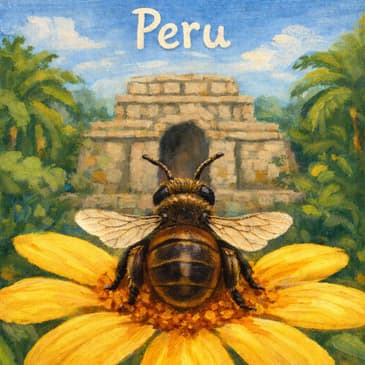
Peru just made native stingless bees—honey-producing pollinators the ancient Maya considered sacred—the first insects ever to receive legal protection. These bees have been cultivated for over 3,000 years and pollinate 80% of Amazonian plants. Ancient wisdom and modern law finally aligned.
KEY SOURCES
Peru stingless bee legal rights
- Provincial Municipality of Satipo, Peru — Municipal Ordinance No. 33-2025-CM/MPS (October 2025), granting legal rights to native stingless bees within the Avireri-VRAEM Biosphere Reserve. Earth Law Center: "Satipo Approves Historic Ordinance: In World First, An Insect Is Granted Legal Rights" (November 2025).
- Municipality of Nauta, Loreto — parallel ordinance (December 2025).
- Wang, S.-J., & Wubie, A. J. (2026). Correspondence in Nature on the first legal rights granted to an insect.
- 2024 reform in Peru's Congress placing stingless bees under formal state protection as part of the country's biological heritage — the national-level change that preceded the municipal ordinances.
- Smithsonian Magazine, "Honey-Making Stingless Bees in the Peruvian Amazon Become the First Insects to Gain Legal Rights" (January 2026).
- The Guardian (Damien Gayle); Inside Climate News (Teresa Tomassoni).
- Rosa Vásquez Espinoza, Amazon Research Internacional — led the campaign and documented the bees with Indigenous communities.
- Constanza Prieto, Earth Law Center Latin America — legal framing and rights-of-nature context.
Maya meliponiculture
- Quezada-Euán, J. J. G. (2018). Stingless Bees of Mexico: The Biology, Management and Conservation of an Ancient Heritage. Springer.
- Villanueva-G., R., Roubik, D. W., & Colli-Ucán, W. (2005). Extinction of Melipona beecheii and traditional beekeeping in the Yucatán Peninsula. Bee World, 86(2), 35–41.
- Jax, K., et al. (2013). Cited in Ecological Economics, 93, 260–268, on Maya cosmology and Xunan kab cultivation.
- Vit, P., Pedro, S. R. M., & Roubik, D. (eds.) (2013). Pot-Honey: A Legacy of Stingless Bees. Springer.
- Madrid Codex — pre-Columbian beekeeping almanacs documenting bee ritual.
- Mongabay, "House of the Royal Lady Bee: Maya revive native bees and ancient beekeeping" (January 2019) — Maya beekeepers have kept domesticated Xunan-Kab colonies for at least 3,000 years.
Stingless bee biology and pollination
- Michener, C. D. (2013). The Meliponini. In Pot-Honey: A Legacy of Stingless Bees. Springer.
- Slaa, E. J., Sánchez Chaves, L. A., Malagodi-Braga, K. S., & Hofstede, F. E. (2006). Stingless bees in applied pollination: practice and perspectives. Apidologie, 37(2), 293–315. DOI: 10.1051/apido:2006022
- Cardinal, S., & Danforth, B. N. (2011). The antiquity and evolutionary history of social behavior in bees. PLOS ONE, 6(6): e21086. — corbiculate bee divergence dating.
Stingless bee honey properties
- Nweze, J. A., et al. (2017). Antibacterial activity of stingless bee honey. Various; see also Vit, Pedro & Roubik (2013), medicinal honey chapters.
#SecretPollinators #StinglessBees #Peru #NativeBees #MayaCulture #Pollinators #Amazon #IndigenousKnowledge #BeeConservation #XunanKab #Ashaninka #Maya
About Secret Pollinators
A wonder-first science podcast about native bees, bumblebees, wild bees, and the lesser-known pollinators most of us walk right past every day.
Visit secretpollinators.com