
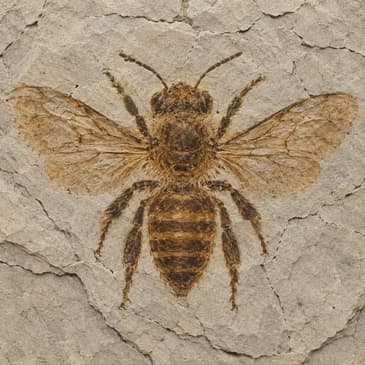
Everyone knows the honeybee isn't native to North America, and it arrived on colonial ships around the 1620s. Except a single fossil, pulled from paper shale in west-central Nevada and described in 2009, quietly rewrites that story. Meet Apis nearctica: a honeybee that lived on this continent 14 million years ago, long before any human walked the Earth. In this episode, I unpack what the fossil actually proves, why it echoes the strange saga of the North American horse, and the honest mystery at its heart — nobody knows when the native honeybee vanished, or why. It almost certainly wasn't the Ice Age that took them. Beyond that, the rock isn't telling. A story about deep time, a returning bee, and the power of a single silence in the fossil record.
REFERENCES
Engel, M. S., Hinojosa-Díaz, I. A., & Rasnitsyn, A. P. (2009). A honey bee from the Miocene of Nevada and the biogeography of Apis (Hymenoptera: Apidae: Apini). Proceedings of the California Academy of Sciences, 60(3), 23–38.
Milius, S. (2009, August 15). Fossil shows first all-American honeybee. Science News, 176(4). University of California Agriculture & Natural Resources — Bug Squad blog, "First Native American Honey Bee" (Kathy Keatley Garvey).
#SecretPollinators #ApisNearctica #NativeBees #HoneyBees #FossilBees #Paleontology #HoneyBeeHistory #DeepTime #PollinatorPodcast #Nevada #NorthAmericanBees #Wildbees #Ancienthistory #Miocene #Fossils #IceAge #AmericanHistory #WildBees
About Secret Pollinators
A wonder-first science podcast about native bees, bumblebees, wild bees, and the lesser-known pollinators most of us walk right past every day.
Visit secretpollinators.com