
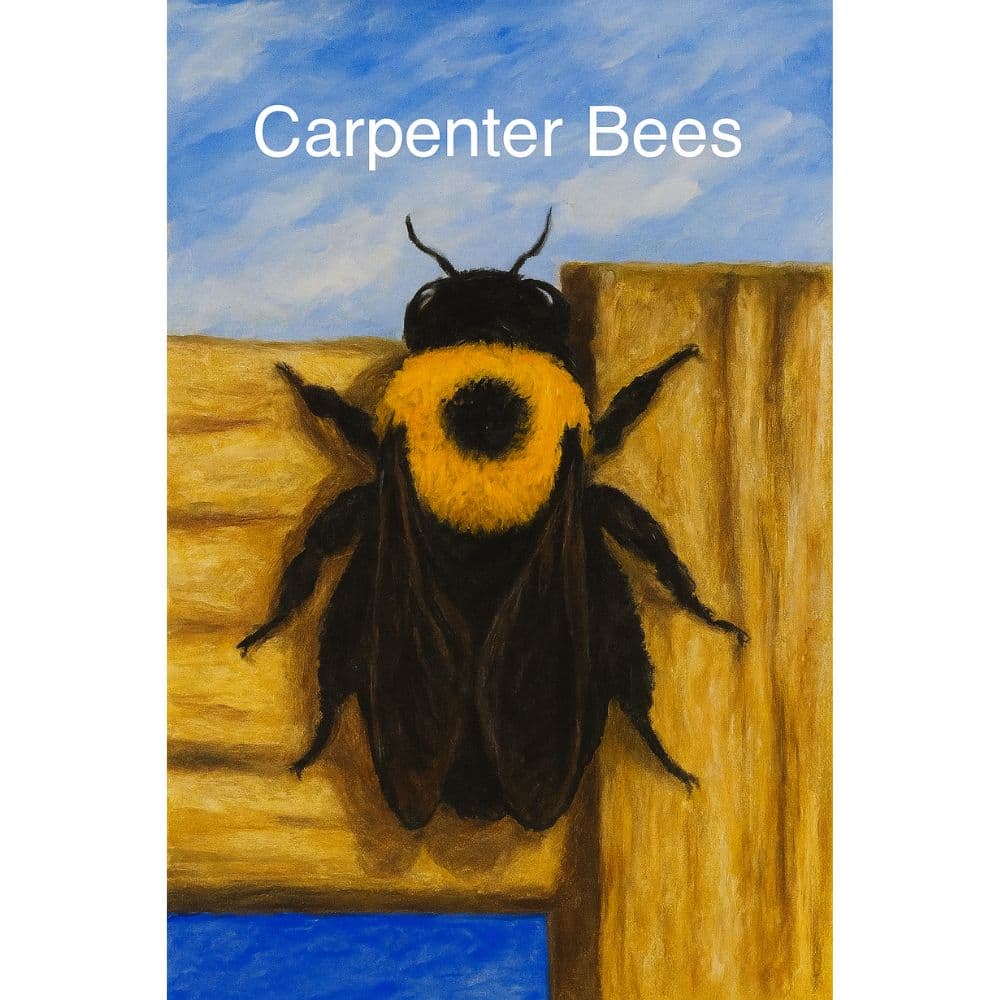
(That Giant Black Bee Hovering Near Your Deck? It's Way Less Scary Than You Think)
Reading Time: 6 minutes
Every spring, without fail, I get the same panicked phone call from at least three different friends (they think I am a bee whisperer):
"Kelly, there's this HUGE black bee dive-bombing me on my deck. It's aggressive. It keeps coming right at my face. What do I do?"
My answer is always the same: "Relax. That's a male carpenter bee. He's all show, no threat."
Let me tell you about carpenter bees - the gentle giants that everyone mistakes for aggressive hornets, and why that big black bee hovering near your deck is actually one of the least threatening insects in your yard.
That Giant Black Bee Is Probably a Teddy Bear
Here's the thing about carpenter bees: they look intimidating. That size, that deep buzzing sound, that aggressive hovering - everything screams "DANGER." But they're not dangerous at all.
Female carpenter bees CAN technically sting, but they're so docile you'd have to really work to provoke one. I've had my face inches from active nest holes, photographing females coming and going, and never had one show aggression.
Male carpenter bees - the ones doing all that intimidating hovering - literally cannot sting. They don't have stingers. That aggressive display? Pure theater.
I actually find it kind of endearing. These males patrol territories around nest sites, trying to look tough for the females and scare away threats. But if you call their bluff and just stand there, they'll hover near you for a minute, realize you're not backing down, and fly off to harass someone else.
It's like being dive-bombed by a teddy bear.
Carpenter Bee vs. Bumblebee: Know the Difference
The most common misidentification I see is people confusing carpenter bees with bumblebees. They're both large. Both buzz loudly. But they're completely different bees with different behaviors.
Here's how to tell them apart:
Size Carpenter bees: About 1 inch long, robust and chunky Bumblebees: Slightly smaller (varies by species), round and fuzzy
Color Carpenter bees: Shiny black abdomen - looks almost metallic, like polished ebony. Some yellow on the thorax (especially females). Bumblebees: Fuzzy abdomen with distinct yellow (or white or orange) bands. Never shiny.
Hairiness Carpenter bees: Less fuzzy overall. That shiny black abdomen is smooth and hairless. Bumblebees: FUZZY. Completely covered in dense hair, like they're wearing a little fur coat.
Behavior Carpenter bees: Males hover and patrol in the same area repeatedly. Females visit flowers but spend lots of time at nest holes. Often seen around wooden structures. Bumblebees: Social - you'll see many workers flying in/out of a ground nest or cavity. Constant foraging activity. Rarely hang around structures.
Social Structure Carpenter bees: Solitary. Each female makes her own nest. No colony. Bumblebees: Social. Queens, workers, colony in a nest.
Sound Carpenter bees: Deep, loud buzz - almost a rumble Bumblebees: Softer buzz, despite their size
The easiest quick check? Look at the abdomen. Shiny and black = carpenter bee. Fuzzy with stripes = bumblebee.
Once you know what to look for, you'll never mix them up again.
The Wood-Nesting Truth (And Why It's Not As Bad As You Think)
Okay, let's address the elephant in the room: carpenter bees DO bore holes in wood. That's not a myth. They excavate tunnels in unpainted, weathered wood to create nest galleries.
But before you panic and call an exterminator, let's talk about what this actually means.
The Hole Females chew a perfectly round entrance hole about 1/2 inch in diameter. It takes them several days of work. Then they tunnel inward, usually with the grain of the wood, creating galleries that can be 6-12 inches long.
The Structure Inside the gallery, females create individual cells separated by walls made of chewed wood fibers (not sawdust - actual constructed partitions). Each cell gets provisioned with pollen and nectar, and an egg is laid.
The "Damage" Here's the reality: a single carpenter bee tunnel does virtually no structural damage to your house. None. The hole and gallery are cosmetic. Even if you get several nests, it's still not threatening your home's integrity.
The ONLY time carpenter bees become a real problem is if the same wood is used year after year by multiple generations, creating a network of tunnels. Even then, it takes years or decades.
I've had carpenter bees nesting in my garden shed for six years. There are maybe a dozen entrance holes total. The shed is fine. Structurally sound. The bees and I coexist peacefully.
The Real Issue The main "damage" is actually from woodpeckers who hear the larvae inside and excavate much larger holes trying to eat them. If you see big chunks of wood torn away, that's birds, not bees.
Male Territorial Hovering: All Bark, No Bite
Let's talk about that hovering behavior that freaks everyone out.
Male carpenter bees emerge in spring and immediately set up territories near nesting sites. They patrol back and forth in the same area - often near a deck, porch overhang, or wooden fence. If you walk into their patrol zone, they'll fly right at you, hovering inches from your face or buzzing around your head.
It feels threatening. It's supposed to feel threatening. But male carpenter bees cannot sting - they don't have the anatomy for it.
I've tested this extensively (for science, obviously). If you stand completely still when a male does his hovering routine, he'll buzz around you for maybe 30 seconds, realize you're not a threat, and leave.
Once I explained this to my deck-phobic clients, most of them actually started finding it amusing. "Oh, there's Gary doing his tough-guy routine again," one client told me. She named her territorial male and now waves at him when she goes outside.
Why Carpenter Bees Matter (They're Pollination Powerhouses)
People get so fixated on the wood-boring that they completely overlook why carpenter bees are so important: they're incredible pollinators.
Buzz Pollination Champions Carpenter bees are among the best buzz pollinators out there. They vibrate their flight muscles at a specific frequency that shakes pollen loose from flowers. This is essential for tomatoes, peppers, eggplants, blueberries, cranberries, and many other crops. Without buzz pollinators, these plants set little or no fruit.
Large-Bodied = Large Flowers Carpenter bees can pollinate flowers that smaller bees struggle with. Passion flowers, trumpet vines, wisteria - these large, deep flowers are perfect for carpenter bees.
Early Morning Workers Carpenter bees are active earlier in the day than many other bees. They'll be working flowers in morning shade when honeybees are still warming up.
Long Flight Season Carpenter bees are active from early spring through fall in most areas. That's months of reliable pollination service.
In my vegetable garden, I've directly observed carpenter bees on my tomatoes and peppers, doing the distinctive buzz pollination behavior. I get excellent fruit set, and I'm convinced these big bees are a major reason why.
How to Coexist Peacefully (Yes, Really)
If you have carpenter bees and want to coexist without conflict, here's what works:
For the Hovering Males Just ignore them. Keep walking to your deck or patio like you own the place (you do). They'll buzz around briefly and lose interest.
For the Nesting Females If you don't want new nests in specific wood, paint it or seal it. Carpenter bees strongly prefer unpainted, weathered wood.
For Existing Holes Wait until fall (after bees have emerged), fill the holes with wood putty or caulk, and paint over them.
Provide Alternatives Put up some untreated wood blocks - 4x4 posts, chunks of firewood, old fence boards - in a less-visible part of your yard. They'll often nest there instead.
Appreciate Their Services Remember that these bees are pollinating your garden. That hovering male is annoying for 10 seconds when you walk outside, but the females are ensuring you get tomatoes, peppers, and beautiful blooms all summer.
The Gentle Giants You Didn't Know You Needed
Here's what changed for me once I stopped seeing carpenter bees as pests:
I started actually watching them. The females are methodical, focused workers. The males are entertaining in their tough-guy displays. Both are beautiful - that glossy black abdomen catches the light in stunning ways.
I realized they were crucial for my vegetable pollination. My tomato yields improved after I stopped worrying about the few nest holes in my shed and just let them work.
Now when I see that big black bee hovering near my deck, my reaction is: "Hey buddy, good to see you again. Go find a girlfriend and leave me alone."
And he does.
Going Deeper
Want to learn more about carpenter bee behavior, how to identify males from females, and the best ways to support them in your garden? That's exactly what I explore on The Secret Pollinators podcast.
I've got a whole episode dedicated to carpenter bees - including the territorial displays, nesting behavior, and why they're such important pollinators despite their reputation.
Until next time - don't fear the fuzzy teddy bears with the tough-guy act.
Kelly Parks Certified Pollinator Steward, Montana
Carpenter Bee Resources
Scared of carpenter bees? Remember: males can't sting, and females almost never do. They're gentle giants.
Want to prevent nesting in specific wood? Paint or seal it. Carpenter bees prefer unpainted, weathered wood.
Have questions? Leave a comment or voice message on my website - I read and respond to each one.
Thank you for reading!