How Flies, Beetles, and Wind (Not Bees!) Make Your Holiday Nut Bowl Possible
By Kelly Parks| Certified Pollinator Steward
I have a confession: every time I crack open a pecan at Christmas, I think about flies.
Not in a gross way. In a "wow, pollination is way weirder than anyone ever told me" kind of way.
Because here's the truth, most people never learn: the nuts in your holiday bowl? They're mostly NOT pollinated by bees. And the chestnuts roasting on your open fire? Those are pollinated by flies and beetles—not a single bee is involved in the actual pollination process.
Mind. Blown.
This is the story nobody tells you about nut tree pollination. It's unglamorous, surprising, and completely fascinating. Let's dig in.
The Holiday Nut Mystery Nobody Asks About
Picture this: It's Christmas morning. You've got a bowl of mixed nuts on the coffee table—pecans, walnuts, maybe some roasted chestnuts if you're fancy. Someone cracks one open, pops it in their mouth, and doesn't think twice about how it got there.
But here's the question nobody asks: How did pollination happen for trees that bloom in spring but produce nuts you eat in winter?
Most fruits and vegetables have showy flowers that scream "POLLINATE ME!" to every bee in the neighborhood. Bright colors, sweet nectar, the whole performance.
Nut trees? They're the opposite. Their flowers are subtle, often green or brownish, and bloom so early in spring that most people never even notice them. Walnut catkins hang like drab tassels. Pecan flowers are tiny and unremarkable. Chestnut catkins appear in early summer but they're not exactly Instagram-worthy.
And for most nut trees, the main pollination strategy isn't bees at all. It's wind. That's right—the same mechanism that makes your car filthy with pollen every spring is how most nut trees get pollinated.
But wind isn't the whole story. And for chestnuts? The pollination story is completely wild.
The Chestnut Plot Twist That Changes Everything
Here's where things get really interesting.
For decades, everyone assumed chestnuts were wind-pollinated like their relatives. Some people thought honeybees helped because chestnut honey is a real thing in parts of Europe. Bees visiting chestnut flowers must mean they're pollinating them, right?
Wrong.
Recent research from France just blew this assumption apart. Scientists spent years monitoring chestnut flowers, photographing every insect visitor, tracking which insects visited both male AND female flowers.
Here's what they found: Bees—honeybees, native bees, all of them—only visit the MALE flowers to collect pollen. They completely ignore the female flowers. Which means they're not pollinating anything. They're just harvesting protein for their nests.
So who IS pollinating chestnuts?
Flies and beetles.
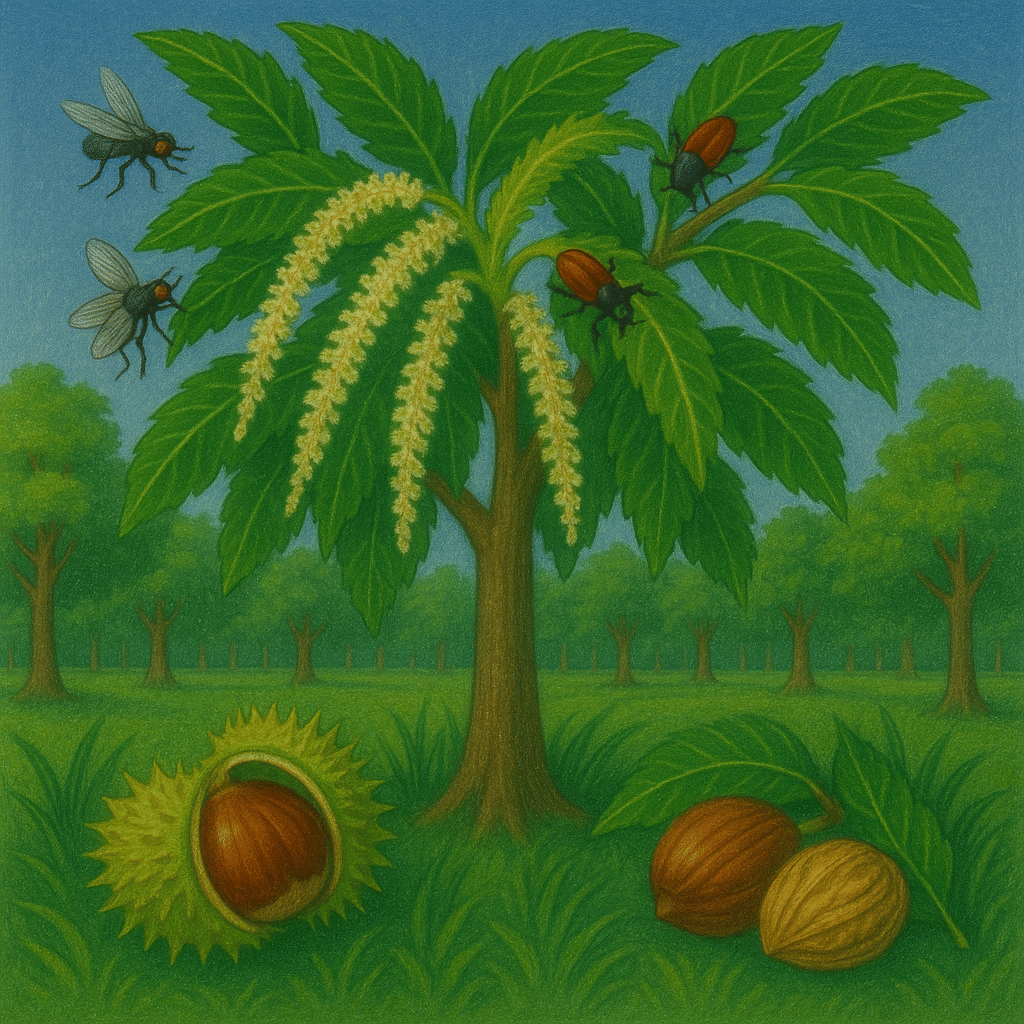
Specifically, calyptrate flies—basically bigger, hairier versions of houseflies—and various beetle species. These unglamorous insects are the ONLY pollinators visiting both male and female chestnut flowers. They're doing 100% of the actual pollination work while bees get all the credit.
Let me say that again: Your holiday chestnuts exist because of FLIES and BEETLES, not bees.
This completely flips the script on what most people think they know about pollination. Bees are important for a LOT of crops—we've covered that extensively on the podcast—but for chestnuts, they're just bystanders collecting pollen for themselves while flies and beetles do the heavy lifting.
Pecans: It's All About the Wind (And Tree Placement)
Now let's talk pecans, because their pollination story is equally fascinating—just in a totally different way.
Pecans are 100% wind-pollinated. No insects involved. The trees release massive amounts of pollen into the air, and if you've timed your tree varieties correctly, some of that pollen lands on receptive female flowers and you get pecans.
But here's the catch: pecan trees have what's called "dichogamy"—a fancy term meaning the male and female flowers don't mature at the same time on the same tree.
Some varieties are "protandrous" (male flowers mature first), and some are "protogynous" (female flowers mature first). If you only plant one type, you'll get almost no nuts because by the time pollen is released, the female flowers have already closed up shop—or vice versa.
This is why commercial pecan orchards plant multiple varieties in alternating rows. When Type A is releasing pollen, Type B's female flowers are receptive. It's pollination choreography managed entirely by wind and careful planning.
For backyard pecan growers, this means: you need at least two compatible varieties within 100 feet of each other, or you'll have a beautiful, useless tree.
Wind pollination also means location matters. Pecans planted in sheltered valleys or surrounded by dense windbreaks may struggle because there's not enough air movement to carry pollen. Conversely, trees on open ridges with good airflow can pollinate neighbors 150+ feet away.
Walnuts: Mostly Wind, But Native Bees Show Up
Black walnuts and English walnuts follow a similar pattern to pecans—they're primarily wind-pollinated and also have dichogamy issues requiring multiple tree varieties.
But here's where native pollinators make a small but interesting appearance: cold-hardy native bees (especially some mining bees and mason bees) will visit early walnut catkins for pollen when not much else is blooming.
Are they pollinating the walnuts? Probably not significantly—wind is still doing 90%+ of the work. But they're active on walnut trees during those critical early spring weeks when other pollinators haven't emerged yet. They're collecting protein for their nests, and in the process, they might move a tiny amount of pollen around.
It's a supporting role, not a starring one, but it's worth noting. Even in wind-pollinated systems, native bees show up and participate in the ecosystem.
What This Means for Your Backyard Orchard
If you're thinking about planting nut trees—or you already have them and they're not producing—here's what you need to know:
For Chestnuts:
Don't rely on bees. They won't pollinate your chestnuts.
Attract flies and beetles by leaving some unmowed areas with wildflowers nearby. These insects need habitat and alternative food sources.
Plant at least two varieties for cross-pollination (chestnuts are also self-incompatible).
Avoid heavy pesticide use, especially broad-spectrum insecticides that kill flies and beetles.
For Pecans and Walnuts:
Plant at least two varieties with opposite flowering times (one protandrous, one protogynous).
Space them within 100-150 feet of each other for effective wind pollination.
Ensure good airflow—don't surround your trees with dense windbreaks or plant them in sheltered hollows.
Consider early-season native bees for walnuts as a bonus, but don't depend on them.
For All Nut Trees:
Be patient. Most nut trees don't produce heavily until they're 5-10 years old.
Observe bloom timing in your area—weather affects when flowers open and when pollen is released.
Join local nut grower associations (yes, they exist!) to learn which varieties work best in your climate.
Why This Matters: The Unglamorous Pollinators Deserve Credit
Here's what I love about this topic: it completely challenges the "bees are everything" narrative that dominates pollinator conservation messaging.
Don't get me wrong—native bees ARE incredibly important for countless crops, and we should absolutely protect them. But the full story of pollination includes flies, beetles, moths, midges, wasps, bats, birds, and yes, even wind.
When we only talk about bees, we erase the contributions of these other pollinators. We miss opportunities to protect the habitats THEY need. And we oversimplify a complex, beautiful system that's been evolving for millions of years.
Flies and beetles might not be as cute as fuzzy bumblebees, but they're out there doing essential work. The chestnuts on your holiday table prove it.
The Bottom Line
Next time you crack open a holiday nut, take a second to appreciate the weird, wonderful pollination strategies that made it possible:
Chestnuts? Thank the flies and beetles.
Pecans? Thank the wind and smart orchard planning.
Walnuts? Thank the wind, with a small assist from early-emerging native bees.
And maybe—just maybe—thank the scientists who spent years photographing flies on chestnut flowers to figure out what's actually happening, instead of just assuming it was bees.
Because the truth is always more interesting than the story everyone tells.
Listen to the Full Episode
Want to dive deeper into the science of nut tree pollination? Listen to Season 2, Episode 17: "Do Native Bees Want Your Chestnuts Roasting on an Open Fire?" on The Secret Pollinators podcast wherever you get your podcasts.
We cover:
The detailed French research on chestnut pollinators
Why dichogamy matters for pecan and walnut growers
Which native bees show up early enough for walnuts
How to create fly and beetle habitat in your orchard
And yes, more than one reference to that classic holiday song
Happy holidays, and keep watching the flowers—even the boring ones. 🌰