
(One Does the Work of 100 Honeybees)
Reading Time: 6 minutes
Picture this: It's early April in Montana. There's still frost on the ground some mornings. My honeybees are huddled in their hive, waiting for warmer weather.
But out in my orchard? There's a metallic blue bee, no bigger than a jellybean, already hard at work on my apple blossoms.
That's a mason bee. And that single female will pollinate more fruit tree blossoms in her short life than 100 honeybees combined.
I know that sounds impossible. It's not.
Let me tell you about the small blue bee that's secretly responsible for a massive chunk of North America's fruit production.
The 100-to-1 Pollination Advantage
Here's the stat that made me do a double-take when I first heard it: one female orchard mason bee can visit 2,000 blossoms per day. A honeybee? About 50-100.
But it's not just about quantity. It's about technique.
When a honeybee visits a flower, she's collecting pollen in specialized baskets on her hind legs. She's neat. Tidy. She grooms most of the pollen into those baskets, so relatively little actually touches the flower's reproductive parts.
A mason bee? She's a mess. The best kind of mess.
Female mason bees carry pollen on their belly - a fuzzy area called the scopa that's basically a pollen mop. She belly-flops onto every flower, grinding pollen all over the stigma. It's inefficient for the bee (she loses pollen constantly) but phenomenally efficient for pollination.
I've watched mason bees work my fruit trees, and "frantic" is the only word for it. They're like tiny blue torpedoes, hitting flower after flower with single-minded focus. Meanwhile, honeybees meander from blossom to blossom, taking their time.
Both strategies work. But for setting fruit? Mason bees are the undisputed champions.
Meet the Blue Orchard Bee
The orchard mason bee (Osmia lignaria) is actually one of several mason bee species in North America, but it's the rock star of the group for fruit growers.
Here's what they look like:
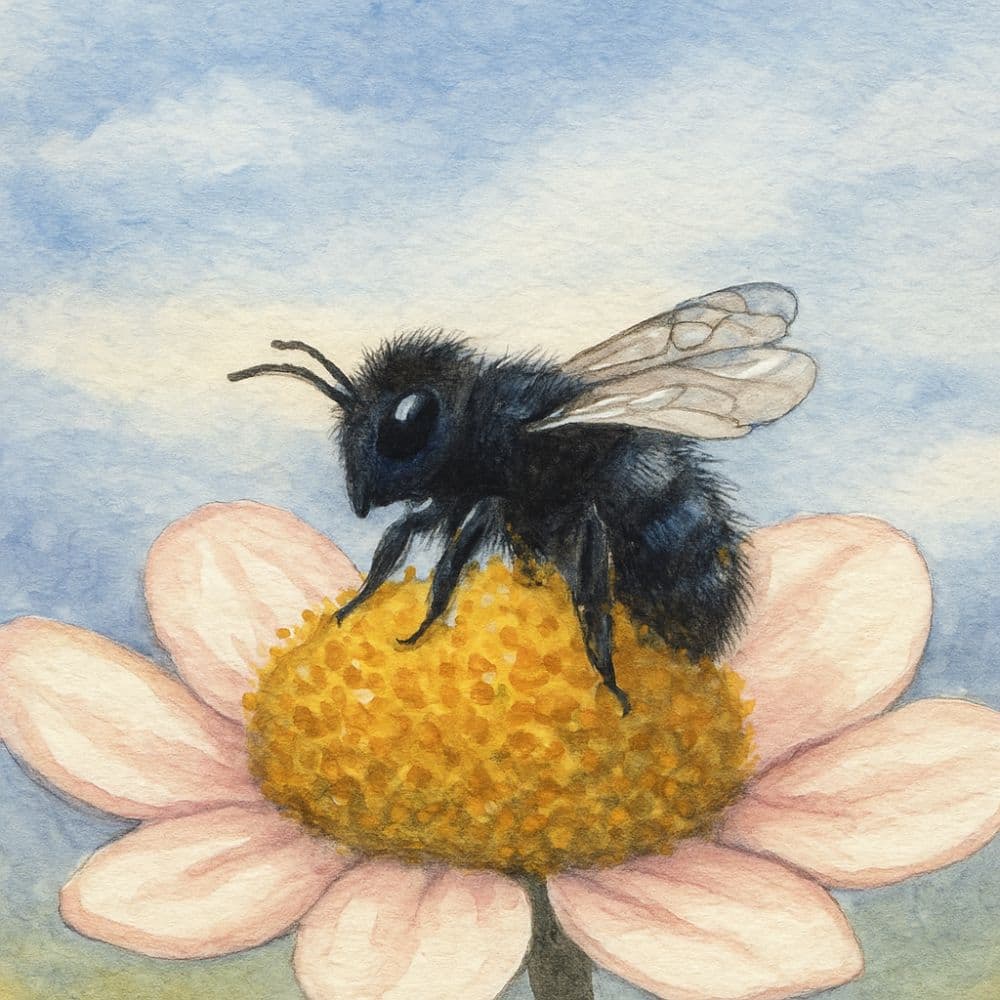
They're about the size of a small honeybee, but stockier and darker. Males are smaller with white facial hair (yes, really - it looks like a tiny mustache). Females are larger with a metallic blue-black body that catches the light beautifully. Both have huge eyes relative to their body size.
The first time I properly identified one, I'd been walking past them for years thinking they were flies. Once you know what you're looking for, though, they're everywhere in early spring.
The Spring Emergence Magic
Mason bees have one of my favorite life cycles because you can actually watch the whole thing unfold in your yard if you set up a simple bee house.
Here's how it works:
Late Winter/Early Spring (March-April in most areas) Adult mason bees emerge from their nesting tubes when temperatures consistently hit 55°F and spring flowers are blooming. Males emerge first, followed by females about a week later.
The Short Adult Life (4-8 weeks) This is their only time in the sun. Males mate and die within days. Females spend 4-6 intense weeks doing three things: eating (building up energy), mating, and nesting.
The Nesting Frenzy Female mason bees find a suitable cavity - a hollow stem, old beetle hole, or (if you're smart) the mason bee house you put up. She makes 15-20 trips collecting mud to build a single cell wall. Then she makes 20-30 trips collecting pollen and nectar to provision that cell. She lays an egg. Builds another wall. Repeats.
A single female might create 5-8 cells in her lifetime, each separated by mud walls. The final mud plug at the front is thicker - her last act before she dies.
The Long Wait (10-11 months) Inside those sealed cells, eggs hatch into larvae. Larvae eat all the stored pollen/nectar, grow, spin cocoons, and pupate. By midsummer they're actually adults - but they don't emerge. They wait. Through summer, fall, and winter, they're in there, ready to fly, just... waiting for spring.
I find this absolutely fascinating. Mason bees spend 95% of their lives as eggs, larvae, pupae, or dormant adults. Only 5% is spent actually flying and pollinating. But in that brief window? They're unstoppable.
Why Orchardists Love Them
If you grow fruit trees - apples, cherries, plums, pears, almonds - mason bees are your best friends.
They're Early Risers Mason bees are active when temperatures are in the mid-50s. Honeybees need it warmer (mid-60s). Those early spring fruit blossoms? Mason bees are often the only game in town.
They Work in Terrible Weather Cloudy, drizzly, cool mornings that keep honeybees home? Mason bees suit up and get to work. I've watched them fly in light rain when every sensible insect is hiding.
They're Native Unlike honeybees (imported from Europe), mason bees evolved with North American fruit trees. They're perfectly synchronized with our spring bloom times.
They're Ridiculously Gentle Mason bees are solitary - no hive, no queen, no stored honey. Nothing to defend. I've had my face six inches from active bee houses, watching females come and go, and never had one show the slightest aggression. Males don't even have stingers. Females technically can sting but almost never do.
This makes them perfect for home orchards, school gardens, and anywhere people are nervous about bees.
The Mud Connection
Here's the detail that makes mason bees truly special: their entire nesting strategy revolves around mud.
They don't burrow into soil like mining bees. They don't chew wood like carpenter bees. They don't cut leaves like leafcutter bees.
Mason bees are masons. They build with mud.
Watch a female collect mud and you'll see her land on damp soil, scrape up a tiny ball with her mandibles, and fly back to her nest. She tamps it into place with her head, creating a smooth, strong wall. The mud dries into a cement-like barrier that protects her developing offspring.
This means two things:
First, mason bees need access to mud. Not just moist soil - actual muddy, clayey soil they can work with. If your yard is all lawn or mulch, they're going to struggle.
Second, they need it close to their nesting site. Females will travel up to 300 feet for mud, but closer is better. Every trip costs time and energy.
I keep a mud source - literally just a shallow pan of clay-rich soil that I keep damp - near my bee houses. Watching the traffic pattern of females flying back and forth with their tiny mud balls is one of my favorite spring rituals.
Setting Up for Success (The Bee House Basics)
You can absolutely attract mason bees without any special setup - they'll nest in existing holes and crevices. But if you want to support them (and watch their fascinating behavior up close), a simple bee house is the way to go.
Here's what works:
Location, Location, Location Mount the bee house 4-6 feet high, facing east or southeast (morning sun), with some overhead protection from rain. Near your fruit trees is ideal. Mine is on the side of my garage, about 15 feet from my apple trees.
Nesting Tubes or Blocks Mason bees need cavities roughly 5/16" in diameter and 6" deep. You can use paper tubes, wood blocks drilled with the right size holes, or reeds bundled together. Avoid plastic straws (condensation issues) and make sure whatever you use allows air circulation. Crown Bees offers excellent nesting tubes specifically designed for mason bees - I appreciate that their products are based on actual research about what works best for bee health and they are passionate about Mason Bees. www.crownbees.com
The Spring Setup Put your bee house out in early March (or when daytime temps consistently hit 50°F). If you have mason bee cocoons from last year's harvest, release them near the house.
Mud Within 25 Feet Keep a mud source close. Mix clay soil with water until it's Play-Doh consistency.
Let It Get Messy Resist the urge to clean up too much around your bee house. Leave some bare ground. Let dead flower stalks stand. Mason bees need a diverse habitat, not a manicured lawn.
One warning: bee houses can become disease traps if not managed properly. The tubes need to be cleaned or replaced each year, and cocoons should be harvested and stored over winter. But we'll dig into the details of proper bee house management in a future post.
If you're just getting started, I highly recommend checking out Crown Bees. They've been dedicated to mason bee education and conservation for years, and their resources for beginners are outstanding. They offer quality nesting supplies, live mason bee cocoons, and—most importantly—science-based guidance on how to raise mason bees successfully. It's rare to find a company so genuinely committed to native pollinator health rather than just selling products.
The Backyard Superpower You Didn't Know You Had
Here's what changed for me once I started actively supporting mason bees:
My fruit tree yields increased noticeably - more apples, better cherry sets, even my raspberries benefited. I wasn't adding fertilizer or doing anything different except making sure mason bees had what they needed.
I became obsessed with watching them. There's something mesmerizing about seeing a female mason bee methodically provision a nest cell, trip after trip, knowing each one is a future pollinator.
I started seeing them everywhere. Parks, nature strips, even downtown in hanging planters - mason bees are already out there, often nesting in overlooked spaces.
The best part? Supporting mason bees is easy. Way easier than keeping honeybees. No hive management, no protective gear, no expensive equipment. Just some well-placed nesting tubes and a mud source.
Your Mason Bee Challenge
This spring, I want you to do two things:
First, look for them. In early spring (March-May depending on your location), watch your fruit trees, spring flowers, and any flowering shrubs. Look for chunky, fast-moving bees with a metallic sheen. Watch their flight pattern - mason bees move with purpose, not the meandering flight of honeybees.
Second, create habitat. Even if you don't put up a bee house, you can help by leaving some bare soil exposed, keeping a muddy patch, and planting early spring flowers like pussy willow, fruit tree blossoms, and spring bulbs.
Once you start seeing mason bees - really seeing them - your entire relationship with your garden changes. These small blue bees are out there working miracles every spring, and most people have no idea.
Until next time - keep your eyes open. The blue orchard bees are emerging.
Kelly Parks Certified Pollinator Steward, Montana
Mason Bee Resources
New to mason bees? Start by simply observing them in early spring. They're most active on sunny mornings when fruit trees are blooming.
Ready to set up a bee house? check out www.crownbees.com
They are passionate about Mason Bees, and they have fabulous educational information on their website, as well as the proper type of Mason Beed houses to purchase!
Thank you for reading!