|
September 1, 2025 | Reading Time: 4 minutes |
|
Welcome to The Secret Pollinators! |
Hi, I'm Kelly from Montana, and I'm so happy you're here. |
If you're like most people, you probably think "bee" = "honeybee." I did too, until I started paying attention to what was actually buzzing around my Montana garden. That's when I discovered a secret world that changed everything I thought I knew about pollinators. |
Every week, I'll share one mind-blowing truth about the pollinators most people never notice. No overwhelming to-do lists. No expensive garden makeovers. Just quick, eye-opening insights about the fascinating creatures working right under our noses. |
Let's dive into today's eye-opener. |
|
🐝 THE MYTH-BUSTER |
"Wait... bees DON'T make honey?" |
Here's the truth that stops people in their tracks: Of the 4,000+ bee species buzzing around North America, only ONE makes honey. Just one. The European honeybee we've all been trained to picture. |
The other 3,999+ species? They're native bees, and they've been quietly doing the heavy lifting of pollination long before honeybees arrived from Europe in the 1600s. |
While honeybees get all the headlines and the honey shelf at the grocery store, native bees are out there pollinating 80% of flowering plants - including a third of the food on your plate. They're better at it, too. A single mason bee can do the work of 100 honeybees when it comes to pollinating fruit trees. |
So why don't we hear about them? Because they don't make honey, build massive hives, or need beekeepers. They're independent, solitary, and spectacularly underappreciated. |
Until now. |
|
🌸 POLLINATOR SPOTLIGHT: Meet the Real MVPs |
Native Bees: The Unsung Heroes of Your Garden |
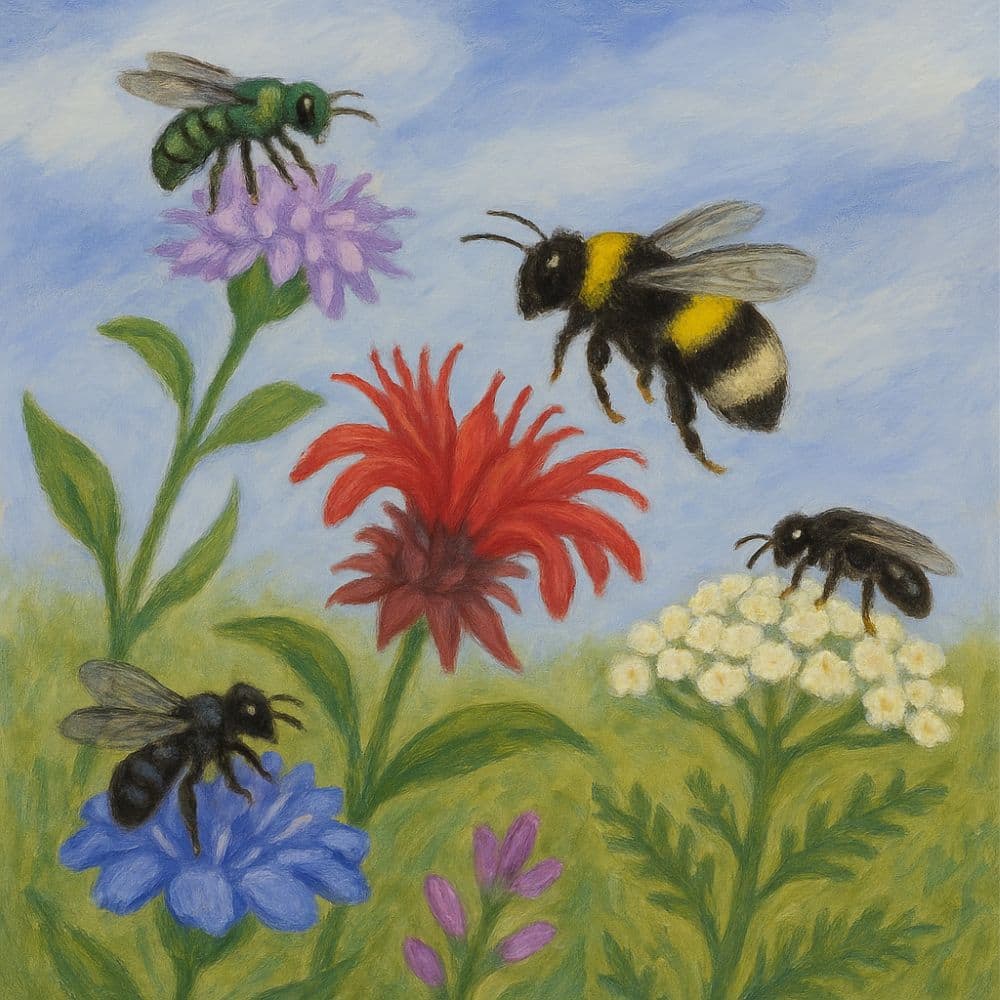
Let me paint you a picture of who's really running the show in your backyard: |
The Miners - Tiny metallic green sweat bees living in underground tunnels, attracted to your salty skin on hot summer days. |
The Masons - Gentle blue orchard bees nesting in hollow stems, emerging in early spring when it's still too cold for honeybees to fly. |
The Carpenters - Big, fuzzy teddy bears of the bee world (often mistaken for bumblebees) that nest in wood and can buzz pollinate tomatoes and peppers in a way honeybees simply can't. |
The Leafcutters - Precision engineers that cut perfect circles from rose leaves to line their nests, pollinating alfalfa fields across the country. |
Here's what makes them extraordinary: Native bees evolved with North American plants over millions of years. They're perfectly adapted to your local climate, bloom times, and flowers. They fly in cooler temperatures. They work in the rain. They're specialized for plants that honeybees often ignore. |
And the best part? Most are solitary, not aggressive, and won't bother you at all. No stinging swarms. No colony defense. Just quiet, efficient pollination happening right under your nose. |
|
🎧 COMING UP NEXT WEEK |
Next week, we're busting the biggest myth of all: "Native bees are endangered and struggling." |
Plot twist: While some species face challenges, North America's native bees are far more resilient than most people realize - IF we give them what they need. I'll show you exactly what that looks like. |
|
📚 ONE MORE THING |
🎧 One More Thing... |
If you want to go deeper into the world of native bees, I host The Secret Pollinators podcast where we explore these fascinating creatures in detail. Each episode is like sitting down for coffee with someone who geeks out about the small wonders most people walk right past. |
Listen to the podcast here: Secret Pollinators Podcast |
|
Until next week - keep your eyes open.
The secret pollinators are everywhere. |
Kelly Parks
Certified Pollinator Steward
Montana |
|
Thank you for reading! |
|
Have a pollinator question? Contact | The Secret Pollinators read every email. |