By Kelly | Certified Pollinator Steward
I have a confession: I've been keeping a secret from you.
Well, not exactly a secret. More like... the best part of a really good story that I saved for last.
Remember when I told you that one container with one native plant could feed about 8 pollinators? That's true. I stand by that 100%. But here's what I didn't tell you: there's a way to make that container COUNT. Like, literally show up on a map as part of a continent-wide network of pollinator habitats.
It's called Bee Friendly Gardening, and I'm kind of obsessed with it.
The Stat That Made Me Do a Double-Take
85% of Americans have a patch of land where they could grow native plants.
Not a farm. Not acres of pristine prairie. Just... a patch. That neglected side yard. The corner by the driveway. That strip of grass you mow every week but never actually use for anything.
And here's where it gets interesting: What about the other 15%? The apartment dwellers? The condo owners? The balcony warriors who think their space is "too small to matter"?
That's where containers come in. And that's where Bee Friendly Gardening becomes genius.
What Actually IS Bee Friendly Gardening?
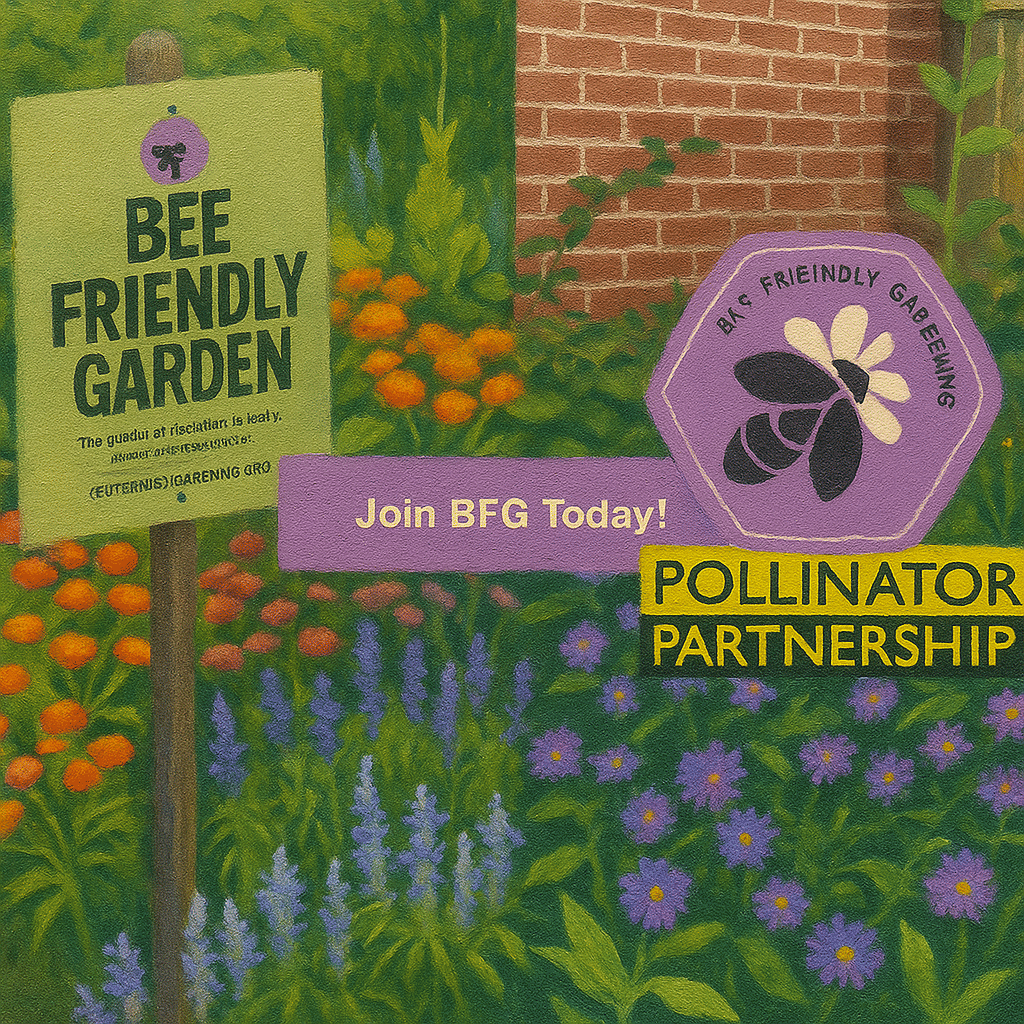
Bee Friendly Gardening (BFG) is a program run by Pollinator Partnership - the same organization that certified me as a Pollinator Steward. It's designed to turn isolated patches of pollinator habitat into a connected network across North America.
Picture this: your balcony container connects to a suburban yard connects to a rural garden patch. It's like a highway system for bees, except instead of asphalt, it's flowers. Your container becomes a rest stop on a cross-country bee road trip.
Pretty cool, right?
But here's what really sold me: BFG welcomes everyone. Even if you haven't planted a single flower yet. They WANT to help you build the habitat. You're not turned away for being a beginner. That's the whole point.
How It Actually Works (The 2-Step Process)
I'm going to be really clear about this because I want you to know exactly what you're signing up for:
Step 1: Join as a Member ($20 to Pollinator Partnership)
When you join BFG, YOU become a member of this amazing conservation network. Here's what happens:
YOU get mapped - You (the person, not your garden yet) become a visible dot on their member map. I love looking at this map. It's weirdly satisfying seeing all of us scattered across North America, all working toward the same goal.
You get a digital welcome packet - This includes your personalized planting guide for YOUR specific zip code. No more Googling "what natives grow in Montana" at 2am. They've done the research. You just plant.
You unlock member resources - Access to the members-only website with habitat guides, pesticide reduction tips, water sources, everything. Plus an invitation to join the Facebook community of BFG members.
You get the link to register your garden - Once you're a member, you can register your actual garden space (whether it's already planted or you're just getting started).
Step 2: Register Your Garden (When You're Ready)
To officially register a BFG garden, you need:
At least 5 pollinator-friendly plants (3 must be native)
Blooms across at least 2 seasons (spring/summer, summer/fall, etc.)
Some nesting habitat (bee house, bare ground, hollow stems - your choice)
Commitment to reduce or eliminate pesticides
Totally doable, right?
Once you register your garden, it gets added to the map of BFG gardens. Now you can see exactly how YOUR space connects to the 551+ other registered gardens.
Why I'm Telling You About This
Look, I could talk about native bees all day. I do talk about native bees all day - it's literally my podcast. But here's the thing that keeps me up at night:
Information without action is just trivia.
You can know everything about native bees. You can ace the pollinator quiz. You can identify a mining bee from 50 feet away. But if that knowledge doesn't translate into actual habitat on the ground, what's the point?
BFG removes the barriers between knowing and doing.
"I don't have space" - yes you do, one container counts. "I don't know what to plant" - they literally tell you, customized for your zip code. "I'm just one person" - you're one of thousands, and the map proves it.
The Two Things We Can Actually Control
Pollinators face multiple threats. You know this. Habitat loss, disease, pesticides. It's overwhelming.
But here's the thing: You and I? We can't cure bee diseases.
But habitat loss and pesticides? That's our lane.
When you create a BFG garden, you're tackling both. Native bees need food (your 5+ pollinator-friendly plants blooming across seasons), shelter (your nesting habitat), and safety (your commitment to reduce pesticides).
Multiply your garden by 551 registered gardens. Then multiply THAT by the thousands of members who could register gardens.
That's not feel-good fluff. That's measurable impact.
The Connection to Bee Friendly Farming
Here's the part that gets me really excited: BFG members aren't islands.
You're connected to Bee Friendly Farming - farms using these same principles at commercial scale. So you've got urban and city gardens providing stepping stones, and farms providing big habitat patches. Together, you're building a complete network for bees to actually survive in.
It's like... if everyone brought a flashlight, suddenly we've got stadium lighting.
Your garden matters because it's not alone.
What You Get for $20
Let's be real: $20 is like a couple of fancy coffees. For that, you get:
✅ Membership in a conservation network with thousands of members
✅ Your personalized, zip-code-specific native planting guide
✅ Access to the member resources library
✅ Invitation to the BFG Facebook community
✅ The ability to register your garden and see it on the map
✅ A badge system that gamifies conservation (yes, really - and it works!)
✅ The satisfaction of knowing your outdoor space is now conservation real estate
As a Certified Pollinator Steward, I can tell you: this is the most accessible conservation program I've found.
Your Assignment (If You Choose to Accept It)
Ready? Here's what I want you to do:
Go to pollinator.org/bfg and click "Bee Friendly Gardening"
Join as a member for $20 (this helps Pollinator Partnership with their amazing conservation efforts)
Check your inbox for your digital welcome packet
Download your personalized planting guide and start planning
Join the Facebook community and introduce yourself
Plant your garden (at least 5 pollinator-friendly plants, 3 native, blooming across 2+ seasons)
Register your garden using the link from your welcome packet
Earn your first badge and send me a screenshot!
This isn't about being perfect. I am definitely not perfect. You don't need a degree in botany or a yard the size of a football field.
You need 5 pollinator-friendly plants (3 being native plants), some nesting space, and a willingness to skip the pesticides.
That's it. That's the barrier to entry.
The Truth Nobody Talks About
We're not saving native bees with a few nature preserves and some good intentions.
We're saving them with thousands of regular people becoming BFG members and converting their outdoor space - however tiny - into habitat.
Your membership matters. Your garden matters. Your weird side yard matters. (And trust me, I have a VERY weird side yard.)
Especially when it's connected to everyone else's.
Want to Learn More?
I created a whole bonus podcast episode about Bee Friendly Gardening - you can listen to it Secret Pollinators Podcast. It's fun, fast, and might just change how you see that pot of asters on your balcony.
And if you're new to The Secret Pollinators podcast, welcome! I talk about native bees, pollinator myths, and why honeybees are getting way too much credit.
Ready to join the 551-garden army?
→ Join Bee Friendly Gardening at pollinator.org
Together we can make a huge difference - one tiny native bee at a time.
This is Kelly from Montana. Thank you for helping native pollinators.
About the Author: Kelly is a Certified Pollinator Steward through Pollinator Partnership. She hosts The Secret Pollinators podcast, where she champions native bees and the diverse pollinators that don't get enough credit. When she's not recording episodes or creating pollinator habitat, she's probably staring at her weird side yard wondering what native plant to add next.
Resources Mentioned:
Related Episodes Posts:
Container Gardening for Pollinators: Operation Flowerpot
Thank you for reading!
Pin this post • Share on social • Tag @SecretPollinators and @Pollinator_Partnership
#BeeFriendlyGardening #SecretPollinators #NativeBees #PollinatorGarden #BFG #PollinatorPartnership